

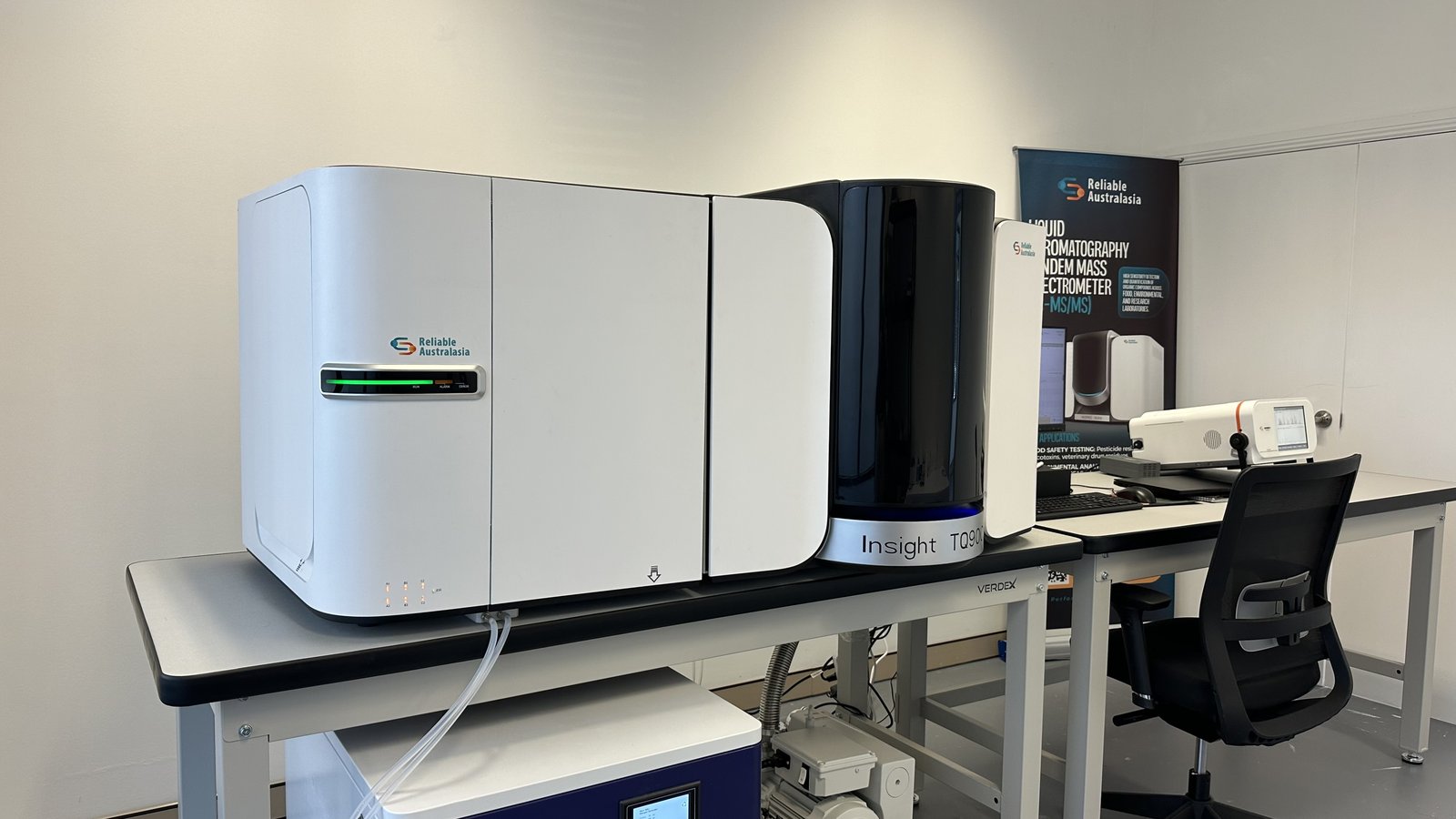
Reliable Australasia has commissioned our first Insight TQ9000 LC-MS/MS in Australia. Two of our R&D engineers spent two weeks on the ground completing the install, and our team then ran two days of demonstrations for laboratories already running LC-MS/MS. This is what those laboratories told us about the ANZ mass spectrometry market.
Key takeaways
- Our first Insight TQ9000 LC-MS/MS in Australia was installed and commissioned in person by two Reliable Australasia R&D engineers over a two week period in September 2026.
- Across two days of customer demonstrations, the questions laboratories asked were about service, method transfer and total cost of ownership far more than about hardware specifications.
- The most consistent complaint about incumbent suppliers was not instrument performance. It was the loss of locally based service and applications support.
- Method transfer emerged as the single largest practical barrier to changing LC-MS/MS supplier in Australia and New Zealand.
- ANZ has not seen a new entrant in analytical mass spectrometry for some years, and the demonstrations confirmed there is specific, articulated demand for a locally resourced alternative.
Who installed our first Insight TQ9000 LC-MS/MS in Australia?
Two of Reliable Australasia’s own R&D engineers, on site, over two weeks in September 2026.
That is worth stating plainly, because it is not how most installs happen in this market. This was not a demonstration unit shipped in for a week and shipped out again, and it was not a remote install signed off over email. Two of the people who build the Insight TQ9000 LC-MS/MS worked through the process in the room, from crate to first acceptable data.
Commissioning is where the gap between a specification sheet and a working instrument gets closed, and it is the stage where most of the frustration in this industry lives. Doing it in person, with engineering rather than only service personnel, was a deliberate decision rather than a logistical convenience.
Why we ran customer demonstrations immediately after commissioning
Because a new entrant learns more in two days of unfiltered technical conversation than in two months of market research.
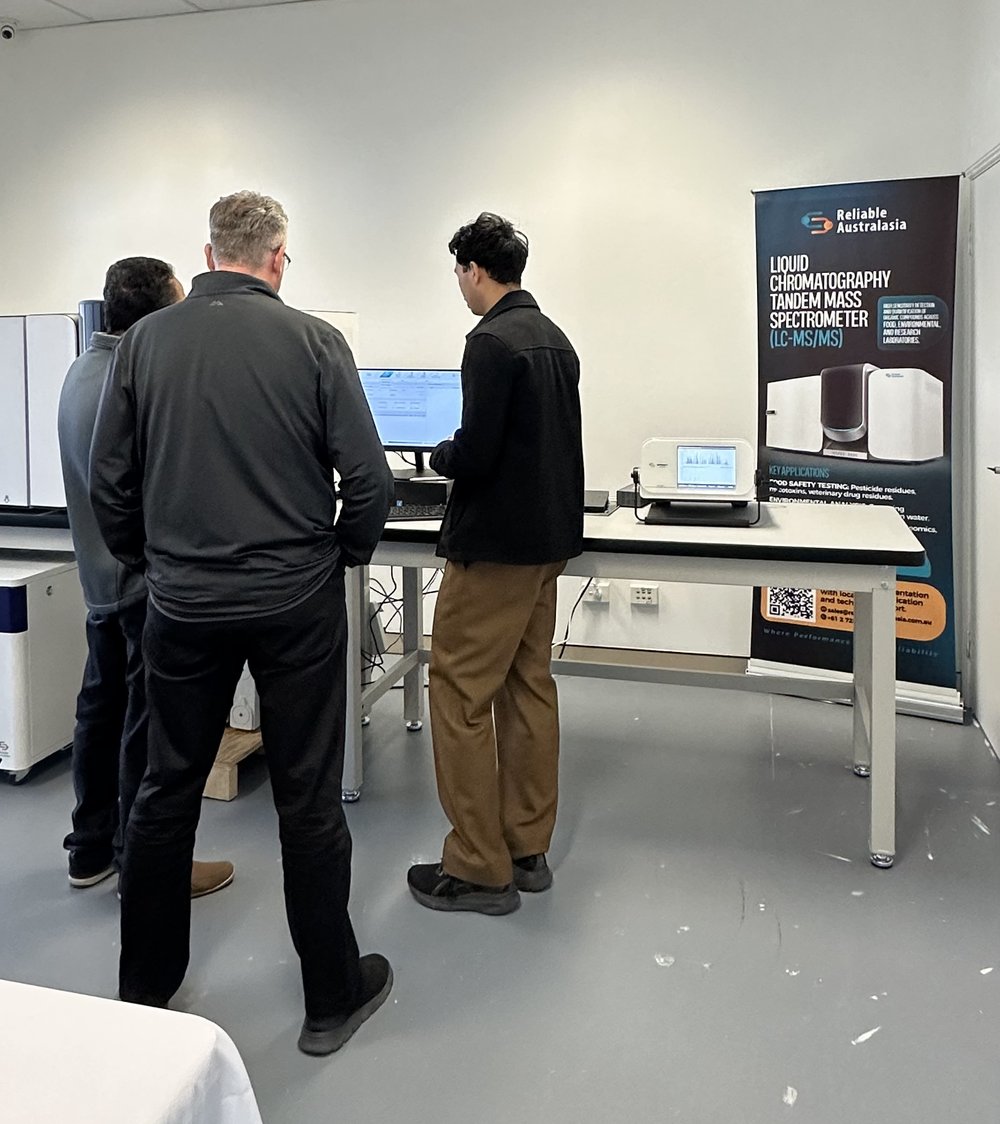
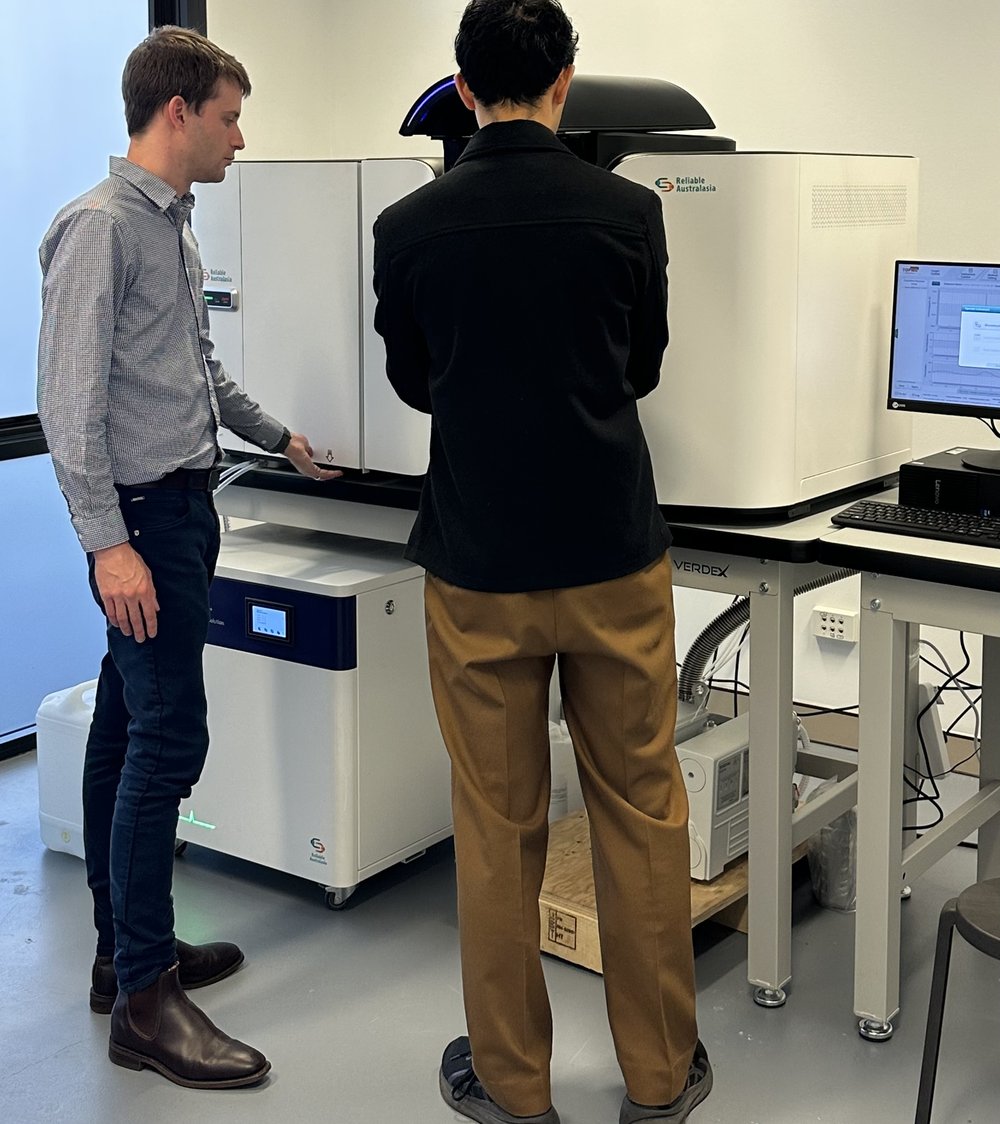
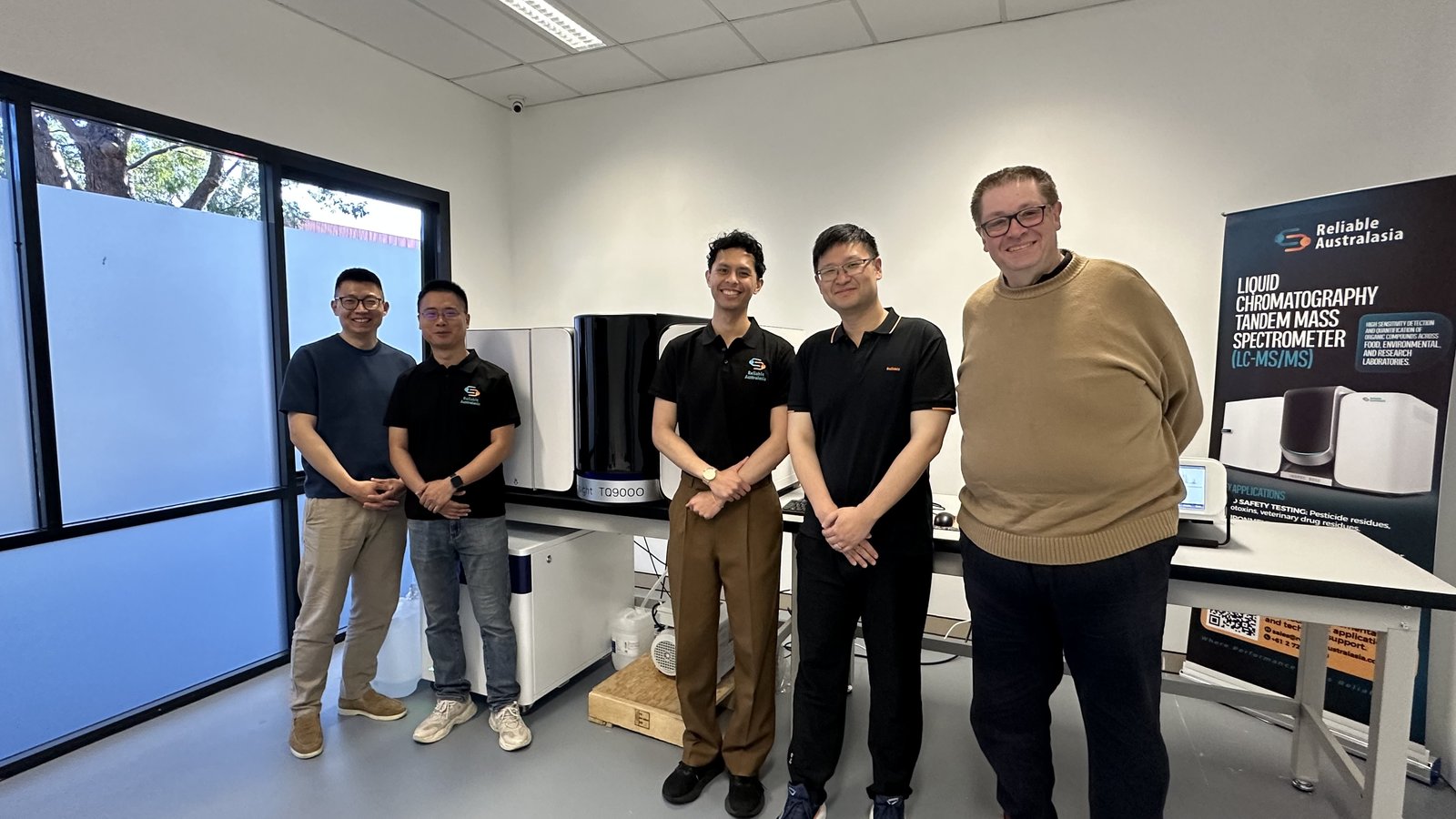
Once the instrument was signed off, we hosted two days of demonstrations for prospective customers. Our team was on the floor across both days: Geoff Xie, our General Manager, Matthew Hill, our Business Development Manager, Candice Olivier, our Marketing Manager, and Leinad Diaz, our Application and Technical Support Specialist. The intent was not a product showcase. It was a working session. We wanted people who run mass spectrometry every day to put the Insight TQ9000 LC-MS/MS through questions of their own making, and we wanted to hear what they raised without steering the conversation toward a sale.
What we got was first hand evidence of where the ANZ market currently sits, and where it is being underserved.
What questions are ANZ laboratories actually asking about LC-MS/MS?
Four themes came up repeatedly across both days, and they were consistent regardless of sector.
Robustness on real matrices, not standards. Very few people wanted to discuss headline detection limits. They wanted to know how the Insight TQ9000 LC-MS/MS behaves on dirty samples, run after run, week after week, and what the maintenance burden looks like when it does not.
Method transfer. Almost everyone in the room already runs LC-MS/MS from another supplier and holds validated methods they cannot simply abandon. The question was not whether the platform performs. It was how much work it takes to move an existing method across, and how much of that work the supplier does with them.
Total cost of ownership across the contract life. Consumables, service, response times and what happens at renewal, rather than the purchase price.
Who actually turns up. This came up more often than any single technical question.
Where are existing LC-MS/MS suppliers leaving gaps in Australia and New Zealand?
The gaps laboratories described were in service and applications support, not in hardware.
Service response times have stretched. Several laboratories described waiting longer than they used to for a service engineer, and described escalation paths that now route offshore before anything happens locally.
Applications support has thinned. The applications chemist who once sat alongside a lab during method development is, in a number of cases, no longer a locally based resource. That leaves laboratories to solve method problems themselves, or to wait.
Renewal conversations have hardened. Pricing on service contracts and consumables was raised repeatedly, usually in the context of a supplier relationship that now feels transactional.
None of this is a criticism of the instruments these laboratories own, and it is worth saying so plainly. The hardware in this market is good. What has changed is the amount of local attention attached to it.
Why applications support matters more than the instrument
Because the instrument gets a supplier shortlisted, and the applications capability is what gets the work done.
The clearest signal from the two days was how much interest went to Leinad rather than to the instrument itself. When someone can sit with a laboratory, understand the matrix, the throughput, the regulatory requirement and the existing method, and then work through how that translates onto a new platform, the conversation stops being a product pitch. It becomes a technical problem solved in real time.
That is what Leinad demonstrated across the two days, and it generated more follow up than any other element of the programme.
If your laboratory is weighing up a method transfer, that is exactly the conversation to start with our team.
What the demonstrations tell us about the gap in the ANZ market
There has not been a new entrant in ANZ analytical mass spectrometry for some years, and that creates a particular market condition. Buyers become accustomed to the service level they receive because no local benchmark suggests it should be different, and suppliers face little pressure to hold a standard when the alternative operates the same way.
Two days of demonstrations told us the appetite for an alternative is real and specific. It is not about cheaper instruments. It is about locally based engineers, locally based applications capability, method transfer support that is resourced rather than promised, and clear commitments on response time.
That is the gap Reliable Australasia set out to occupy when we launched here, and this feedback has sharpened how we go about it.
Where to from here
The Insight TQ9000 LC-MS/MS is now installed in Australia and available for demonstration. If your laboratory runs LC-MS/MS and you would like to bring a real sample, a real method and a real problem, that is the conversation we want to have.
We are also continuing to gather feedback from laboratories across Australia and New Zealand as we build out our applications and service capability. If you run mass spectrometry and have a view on what this market is missing, we would like to hear it.
Alongside the Insight TQ9000 LC-MS/MS we supply the Insight SQ6000 ICP-MS for trace element and heavy metal analysis, and the Explorer 2000 portable GC-MS for volatile compound analysis in the field or the lab. All three are installed, trained and serviced by our Australia and New Zealand based team.